
Univ.-Prof. Dr. Dorothee Bohle
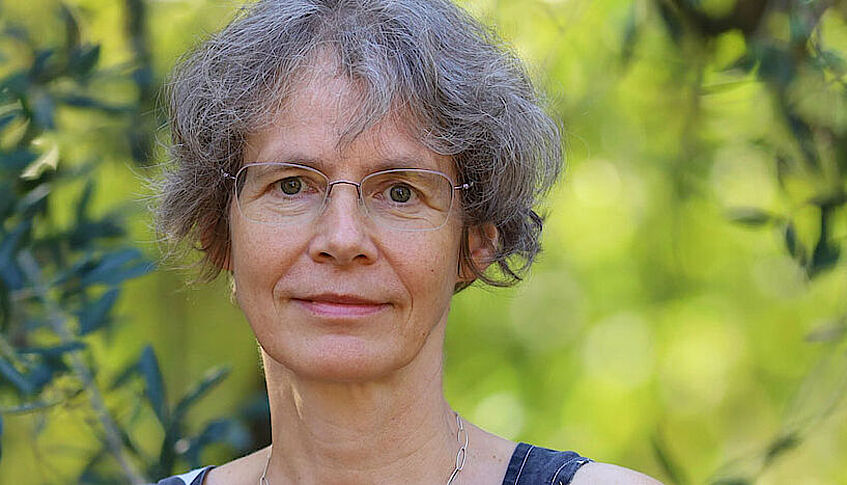
Fotoquelle: privat.
Univ.-Prof. Dr. Dorothee Bohle
Professur für Vergleichende Politikwissenschaft
Schwerpunkt auf Südost- und Osteuropa
Erreichbarkeit
Neues Institutsgebäude
Universitätsstr. 7/2. Stock
Zi.-Nr.: B 206
1010 Wien
T: +43-1-4277-494 29
E-Mail: dorothee.bohle@univie.ac.at
Studienassistentin: Lina Ehrich, BA
Sprechstunde
wöchentlich Dienstag, 15:00 – 16:00 Uhr
nach Vereinbarung per E-Mail mit Studienassistentin Lina Ehrich, BA
Lehre
Lehrveranstaltungen: u:find
Short CV
• 1984-1992 University Studies of Political Science in Hamburg, Paris and Berlin
• 1994-1999 Junior Research Fellow at the Social Science Research Center, Berlin (WZB)
• 2001 PhD in Political Science, Free University of Berlin
• 2000-2006 Assistant Professor of Political Science, Central European University, Budapest
• 2006-2013 Associate Professor of Political Science, Central European University, Budapest
• 2013-2014 Visiting Professor (Vertretungsprofessur), Department of Social Sciences, University of Osnabrück
• 2013-2016
Professor of Political Science, Central European University, Budapest
• 2016-2021 Professor of Social and Political Change, Department of Social and Political Sciences, European University Institute, Florence
• 2019-2021 Dean of post-graduate studies – Director of the post-doctoral Max Weber Programme, European University Institute, Florence
• Since October 2021 Professor of Comparative Politics at the University of Vienna
Areas of research
• Comparative Political Economy (varieties of capitalism, institutional political economy, welfare states, industrial relations, housing (finance) regimes); Central and Eastern European economy and politics;
• Resilient neoliberalism? Policy responses after the Great Recession in Europe’s periphery
• The political economy of the COVID-19 crisis in East Central Europe